
Learning Center EAM What Is EAM in Maintenance? In today’s industrial landscape, Enterprise Asset Management (EAM) is pivotal for organizations aiming to maximize the value and performance of their physical
Learning Center
Work Order Management
What is a work order in SAP?
If you’re using SAP to manage maintenance or production, you’ve probably come across the term work order.
In simple terms, a work order in SAP is like a digital job card. It tells your team what task needs to be done, who’s responsible, and when it should be completed — all managed through the Plant Maintenance (PM) module of SAP.
What are the key components of a work order in SAP?
When you open a work order in SAP, you’ll find everything your team needs to plan and execute the task efficiently:
Work description: What exactly needs to be done — like replacing a part or performing a calibration.
Equipment details: The asset or machine involved in the task.
Resources: People, materials, and tools assigned to complete it.
Dates: Start and end times to keep work on schedule.
Costing: Labour and material costs linked to your budget.
Priority & status: Helps you track whether it’s planned, released, or completed.
Operations: Step-by-step tasks or instructions
Think of these as building blocks that make your work order both traceable and measurable.
Why are work orders important in SAP?
Work orders aren’t just paperwork — they’re what keep your operations running smoothly. Here’s why they matter:
They ensure compliance and audit readiness by documenting every maintenance step.
They help you track asset reliability and uptime, preventing unexpected breakdowns.
They make resource allocation easier by assigning the right people and materials.
They improve cost visibility and help managers stay within budget.
And best of all, they create a performance history for smarter, data-driven decisions later.
How does SAP manage work orders?
SAP PM allows you to create, schedule, and track work orders automatically based on your maintenance strategy.
For example:
Preventive tasks can trigger a work order when a specific time or usage limit is reached.
Corrective maintenance can generate a work order when a technician reports an issue.
Production requirements can create a work order to ensure machines are ready before a new batch run.
This automation helps maintenance teams stay proactive instead of reactive.
How can you simplify work order management in SAP?
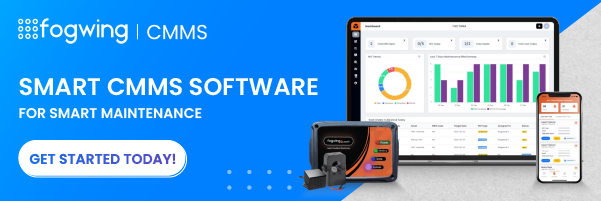
Managing work orders inside SAP can sometimes feel complex, especially for smaller teams.That’s where Fogwing CMMS comes in a cloud-based, AI-powered platform designed to simplify task tracking, automate scheduling, and give you real-time visibility into your maintenance operations.
Get our newsletters delivered directly to your inbox.
By submitting ,you agree to Fogwing Terms of Service. Your personal data will be processed in accordance with Fogwing Privacy Policy.
Read more articles...
Learning Center Maintenance Management What is PM and CM in maintenance? In maintenance, PM stands for Preventive Maintenance — a proactive approach to preventing failure through regular, scheduled care. CM
Learning Center Asset Monitoring Industry 4.0 vs Industry 3.0: A Comparative Journey of Industrial Evolution Industry 4.0 vs Industry 3.0 The industrial world has evolved through several revolutions — from